

About me
My background story
I started this blog because I know what it’s like to be in the thick of it: navigating behaviours you’re still trying to understand, advocating in systems that don’t always listen, and carrying the weight of wanting your children not just to cope, but to thrive. I also know how powerful it is to hear someone say, “You’re not alone. I get it.”
My goal is to create a space where parents in similar situations can find clarity, connection, and compassion. A place where we can talk honestly about the challenges, celebrate the wins (big and small), and share the tools that help us support our children in becoming the fullest versions of themselves.
I’m not here as an expert — I’m here as a mum who’s learning, adapting, and advocating every single day. If you’re navigating this journey too, I hope you’ll find comfort, strength, and community here.
To add some context, below I share the story of how this blog even came about.
For the purposes of all my blog posts, I refer to my girls as:
"L" (age 26) and "H" (age 11).
My youngest, H (diagnosed ASD and ADHD at age 9) has been having swimming lessons since she was five months old. Little did I know that water would be (and still is) a MAJOR regulation tool for her - bathing, swimming, crunching blocks of ice, sucking freezing cold water through a straw. You name it, she wants to be in constant contact with it, via any means. Swimming is her regulation “thing”.
About 3 years ago, H's swimming teacher announced that she would be distributing company branded rubber swimming hats for all students. We didn’t have H's diagnosis at this point although I had done a fair amount of my research by that time and I was convinced that H had SPD (Sensory Processing Disorder) but I hadn't yet vocalised it to anyone.

How unhinged would I sound by saying “sorry but I think H may have SPD and if I try to get any kind of rubber apparatus on her head, she’s likely to attempt to remove my eyeballs with her bare hands and I’m quite attached to my eyesight so I am a bit reluctant, as you can imagine, to suggest that she might need to do this!”. I said that we would have to discontinue the lessons if the hats were going to be mandatory. Fairly dramatic to say the least of course but there we are!
The swimming teacher's response was my first ever validation and it almost blew me away. It turned out that she also has a daughter with similar sensory challenges and it opened a whole new dialogue that neither of us had expected. After much discussion, I offered her some of my experiences of what had worked (and not worked!) for our family on a day-to-day basis.
She asked where I had accumulated all this knowledge - simply from years of podcasts, webinars and online research which I had trialled and adapted to our daughter's needs. It seems I am a SEN parent with years of perpetual tenacity (thanks to my own ADHD hyper focus which is of course a common ADHD trait!).
So, our swimming teacher asked me to consider writing a blog.
Well”, thought I, “I don't know the first thing about how blogs are made and I haven't done any creative writing since I was at school over 30 years ago! What a positively terrifying thought!“
Putting that aside, I’m trying to hold down an almost full-time and fairly demanding job, run a house, do 90% of the childcare and support two sick / ageing parents. I congratulate myself on some days because I’ve worked all day, done laundry, made dinner, co-regulated my children AND found time to wash my hair! When exactly would I do this blogging? Whilst I’m sleeping on H's bedroom floor? (which I actually did for two years and which I talk about in my article "The joys of SPD and sleeping"!)
Anyway, as time has gone by, and after talking to other school mums and friends of friends in a wider circle, I could see that there is a whole tribe of us out there! A tribe of struggling parents whose children don't quite fit the "norm". The children who are, as some might term, “SEN-betweeners”. Those children who are not obviously on the spectrum to an onlooker, whose struggles are almost invisible to the outside spectator (sometimes even to the trained professional!) but a child who is nonetheless crumbling behind their mask because they are experiencing the world as a square peg in life's round hole. If you haven’t read the book “Raising the SEN-inbetweeners” by Lisa Lloyd, then you must! If you have kids in mainstream school who are either diagnosed as neurodivergent or you suspect they are, then this book is for you. I couldn’t put it down. So relatable!
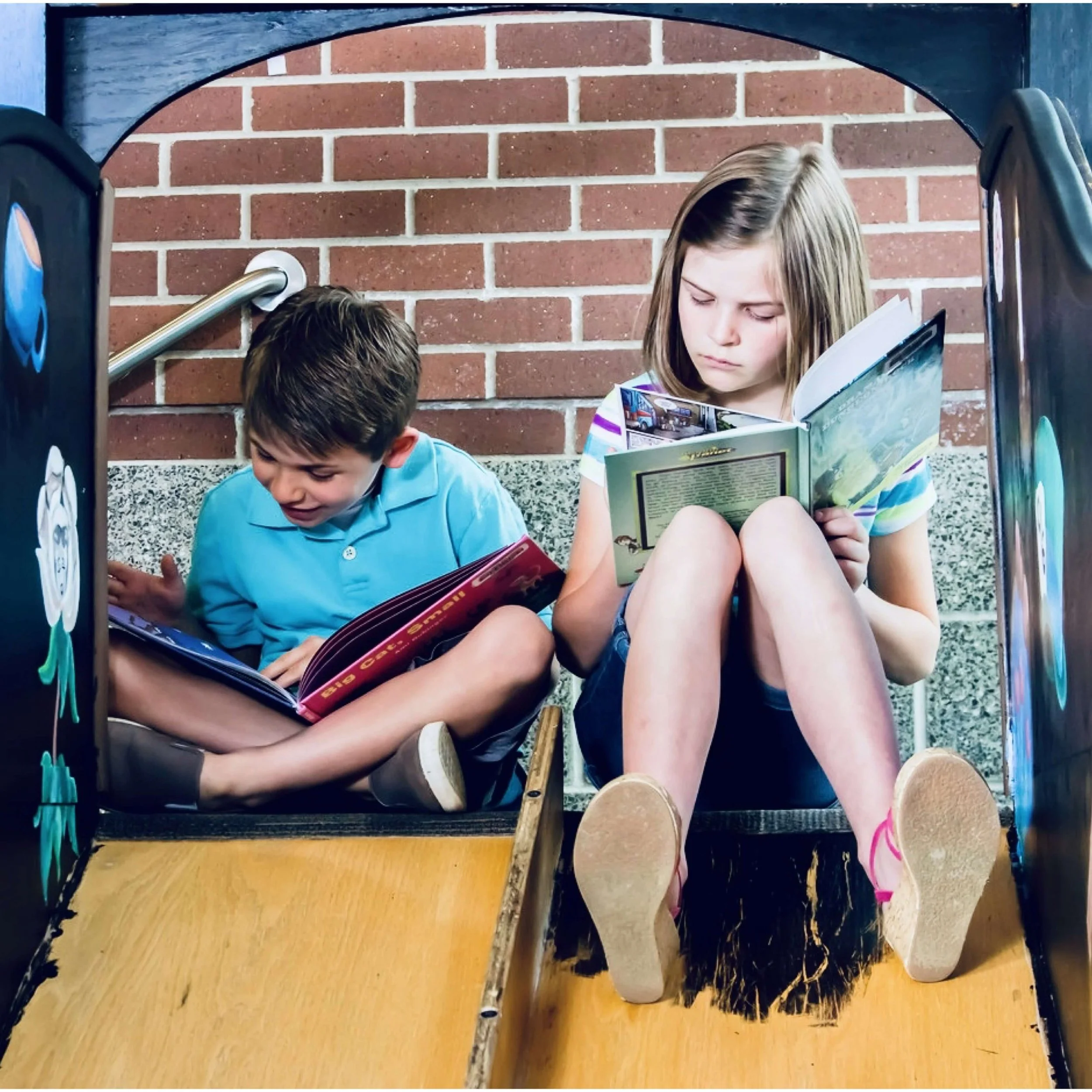
To teachers and professionals, your SEN-between child may be “apparently fine”! They are, after all, in mainstream school and despite the fact that they may display some behavioural issues in the classroom (or maybe not if they are a prolific masker like my two!) they are generally not being flagged up as a problem child that needs a referral to CAMHS etc. In some cases those behavioural issues may be observed in more than one setting (i.e. at school, external clubs and at home) in which case you may have some teeny tiny hope of getting a referral at some point in the future alongside your unicorn! However, perhaps the child is only showing these concerning behaviours at home ..... and this when it gets tricky in my experience.
If your child is only displaying challenging and concerning behaviour at home (commonly because it's their safe space and they are able to take their "mask" off) it is a whole different matter. When you approach school with your concerns, they dismiss you by telling you that your child's behavioural issues must come from home because they are fine at school (and they shrug their shoulders at you - you probably know the gesture to which I refer)! Then they suggest you attend a parenting course because you, the parent, are of course the problem.
Marvellous.
How many of us have been through that joyous experience?
Lots of us would be my bet.

Back in 2022, H's Y2 teacher said to me:
"You need to take back control, if she's behaving like that at home, she's being allowed to get away with it. We don't see any of that kind of thing from her in school!!".
Now.... if I had been a first time mum, I could have walked away from that conversation believing that she was right. But H wasn't my first and although I had difficulties with my L because I didn't know she probably had ADHD, they were nowhere near on the same scale as what we were experiencing with H.
"Mum intuition" told me that we were dealing with something much bigger. And I pushed for a CAMHS referral. I was told to keep a detailed log of all her meltdowns at home, how they came about, what she did afterwards. I had a spreadsheet that I filled out for months, day in day out. I was convinced it would be enough evidence for a referral.
But guess what, their rules are simple.
They ask school to fill out some forms at the same time as they ask parents fill out theirs. If those school forms get sent back to CAMHS with "nothing to see here, the child is fine in school, model student, no disruptive behaviour" then you will almost certainly be rejected by CAMHS - on the first try at least.
Their rule is that those behaviours need to be seen in more than one setting. I did three rounds of this before I gave up.
They are so under resourced that the bar has to be set high enough that only those with the most concerning behaviours, across multiple settings, have a chance of getting on their list. And H was so good at masking that we were NEVER going to get on that list.
So I decided, in my desperation, to swerve CAMHS and that we would manage this in-house as a family (or rather I would learn what we needed to know and drag my husband along for the ride because we needed to be on the same parenting page but he didn't have time to learn it alongside me due to his job).
So I would do the research, work out what we were dealing with and see what we needed to do (good old ADHD hyperfocus in full colour!).
Once I had done enough research to assert my suspicions that we were likely dealing Autism Spectrum Disorder and/or ADHD issues, we made the decision (and we were fortunate enough to be able to afford it) to get her assessed privately. I fully appreciate this shortcut isn't accessible to everyone and I am profoundly grateful to have had the opportunity to get across the finish line with a diagnosis in just a few months.
But in all honesty, diagnosis or no diagnosis, the strategies are the same, they work the same way and they are still (in every way) meeting your child's needs when you find the right ones for your family. And that's what this is about, right? Meeting your child's needs. At home, in the morning, at bedtime, during the school holidays when lack of routine sends them off the rails.
Learning to meet their needs
I have learned to meet many of my girls’ needs and I am still learning to do that because, of course, the needs change as our child grows, right? And also as many SEN parents will likely know, a strategy that takes weeks to perfect might end up in the bin after 10 days because their child decides it's no longer a “go-er” and they are bored with it (not enough dopamine in that, sorry, mum!). It is an ever-evolving project!
Over the last year or so, I have shared some of my tried and tested methods with friends/other parents in a similar boat. I found myself giving out the same things over and over to lots of people and I suddenly decided it would be much easier to get it all out of my head and down in one place. So here you are, not just for H's swimming teacher(!) but for anyone who needs some hope, solidarity and guidance, here is my long awaited blog! For all those friends, family members and the wider tribe of parents who find themselves at sea with parenting neurodivergent children.
Try to remember that some days, parental love looks like the patience of an angel. Other days it just looks like bare survival. I’m hoping that this blog will capture an essence of both. A place where you can relate, resonate, take comfort and build some useful strategies. And for anyone who is dying to know the end of the swimming hat story, H was allowed to continue without it! Although we have now compromised and she wears a fabric swimming hat instead. Got to love a good old compromise, it's the foundation of life in our house (autonomy is a HUGE subject in this neurodiverse sphere and something that you will see in a lot of my articles).
So, in each post, I am going to share anecdotes from raising my two neurodivergent girls (for entertainment and context) but I will follow them all with some winning strategies that I have learned along the way. Take the bits that work for you, discard the bits that don't.

It's not foolproof by any means, it just comes from the heart and soul of one struggling SEN parent to another - I didn’t set out to become a mine of information in neurodiversity, I have just become a parent who is refusing to give up. Showing up for my girls is the fabric of my world.
If you’re looking for parenting perfection here, you won’t get it, but you will get raw honesty and hopefully something tangible that you can bring into your family home. Who knows, in some abstract way, getting years’ worth of struggles down on this blank canvas could be as much a healing therapy for me as it is about knowledge sharing with you!
Have Questions?
Send me a quick note and I will try to help where I can