

Sensory Processing Disorder | More than you think?
Sensory Processing Disorder (“SPD”)
What is it and what does it mean?
SPD (Sensory Processing Disorder) is so prevalent in the neurodiverse community. It’s often one of the first obvious markers that there is something else at play with your child when they dysregulate. It is also something that a lot of people aren’t aware of. Or more particularly, the extent to which it affects so many aspect of daily life. So how might it be affecting our child?
Sensory processing is the system that manages all the human senses such as sight, sound, taste, smell, touch etc. In addition to the five most commonly known senses, there are also three less well known ones: proprioception, interoception and vestibular. These three are all based around how we move our bodies in the world around us, spatial awareness, how we balance, and our internal signals such as recognising when we are hungry, cold or need the toilet.
All of the above senses play a vital role in how our brain processes the environment around us, every second of the day. It controls how we process the sound of a siren in the street, the intensity to which we smell food, the pain we experience when we cut ourselves, how to avoid bumping into things etc. For people with Sensory Processing Disorder (“SPD”), the way the brain processes these senses can function very differently. Each sense can fall into one of two categories:
hypersensitive | where they may feel a particular sense (or several particular senses) really intensely; and
hyposensitive | where they may receive very little, or no, sensory input so they seek to receive it by external means.
It is also common to have a mixture of the two types. For example, someone might be hypersensitive to light and is always asking to dim the lights or wear sunglasses but conversely they may also be hyposensitive to touch and so they often “sensory seek” by wanting to touch things or feel the safety of compression using a weighted blanket.
Both of the two types of sensitivity can have a huge impact of a person’s emotional regulation throughout the day. Hypersensitivity can cause a lot of overstimulation which is exhausting and creates overwhelm. It can literally be the catalyst to a child’s meltdown, especially by the end of the day, when they are tired.
I had no idea about this until about five years ago. Now I look back, I can identify so many triggers that were glaringly obvious.! And I can also see them in others at 100 paces!!
Knowledge is power though isn’t it? It’s only when you discover sensory processing that you realise how much it is accountable for in every day life, especially for someone with SPD. It shows up in ways we aren’t even aware of.! I see people making both conscious and unconscious decisions to avoid certain tasks or procrastinate while their brain takes time to prepare itself for the onslaught of sensory input.
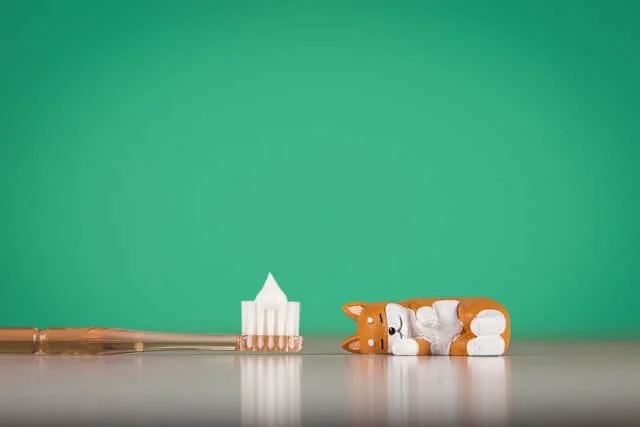
This is a fun one isn’t it! Any parent with a child who has hypersensitivity to taste will appreciate the teeth brushing battlefield.
How much would we love to just say “right, time to brush your teeth, off we go to the bathroom” and they say “ok mumma!” and trot off to stand at the sink. Nope. Doesn’t happen in our house either. It took us a long time to realise that the reason was not defiance, it was the difficulty in transitioning to the onslaught of sensory overload - the minty toothpaste, the feeling of the bristles on her gums - eeuuggghh.
Just brush your teeth!!!!!
So I took this decision: “If the mountain won't come to Muhammad, then Muhammad must go to the mountain." Even now, at 11 years old, we don’t ask H to come to the bathroom. We bring the already loaded toothbrush to her, wherever she is. It has got easier as she’s got older but even now, as we hover the toothbrush gently in front of her face, we have to wait whilst she prepares herself to transition to the sensory onslaught that she so desperately wants to avoid. If we try to get her to open her mouth too soon, she turns her head away, lips clenched tight. She is visibly gulping and swallowing whilst her brain frantically attempts to get ready. Showing impatience or frustration if she’s already “fizzy” after a hard day is also very unproductive. Even now, I still sit there, toothbrush poised in my hand, and inside my head I’m saying “count to 10 Kate, and breathe, if I don’t show my frustration, we will get it done quicker in the end!”.
Over the years though, to help with the transitioning to the sensory input needed to brush teeth (when we had flat refusal!) we found it worked well to bring other senses into play to override the taste and touch hypersensitive senses. We have adapted the techniques as H has grown but when she was around five, we devised a cunning plan to engage her in something that was fun for her (so a dopamine hit if you like) that she would associate as being a positive experience as much as possible. We had a handful of tricks up our sleeves that we would rotate weekly to stop the ADHD boredom kicking in. So things like:
“Oh H, fun game for you! Here is a piece of A4 plain paper and a felt tip pen. Daddy is going to think of an object. But here is the trick, let’s see if you can close your eyes (no cheating!) and then follow daddy’s instructions to see if you can draw the object he’s describing! So daddy might say ‘draw a straight line down the left hand side of the paper, and stop! Now move the pen to the right a bit, and stop’ etc. You have to listen VERY carefully to daddy’s instructions! We are going to set the timer for two minutes. When the time starts, you open your mouth. I am going to brush your teeth at the same time that you are listening to daddy and drawing the picture. When the two minutes is up and the buzzer goes off, open your eyes and see if you can guess what the object is that you have drawn!”. H was so focused on using her ears and hands to complete the game, that the sensory input in her mouth took a temporary back seat.
“Ok H, here is another fun game. I am going to hand you a big blob of blu tac. Make sure you warm it up and make it nice and squidgy first” (this would create some touch sensory input with her hands so she was already focusing on her hands rather than her mouth). “So, when the two min timer starts, open your mouth and at the same time I am going to shout the name of an object that you have to make with the blu tac. When the two minutes is up and the buzzer goes off, we will stop brushing and I have to guess what you have made!”. Giving her a time frame of knowing how long it will last and providing a visual timer so that she could see the time disappearing was also really useful.
Now I hear some of you thinking “oh my goodness, that is A LOT of effort to get a small set of teeth brushed.” Yep. Yes it is!!! However, what we realised is that the teeth brushing task could be done in 15 minutes (allowing time to explain the game, giving space for her to prepare her brain for transition and then waiting for her to be ready to begin) rather than the 45 minutes it took, along with insurmountable energy, to get her to just brush them. The procrastinating, the whining, the pleading, the avoiding, the anger, the tears, the meltdown. When you add all of those things up and spend 45 minutes doing that (twice a day), you start to realise that putting a bit of effort in up front can go a long way!!
Now that H is 11, she’s obviously grown out of those types of games. She now brushes her own teeth in the morning (although, in true ADHD style, she can only do it in the last few minutes before leaving the house when the deadline creates the dopamine needed to initiate the task!) but I still brush them at night.
The bedtime teeth brushing is currently looking like this: she gets three minutes of Roblox time in which she has to agree to let me brush whilst she plays. She is allowed to use my phone to play and she doesn’t get handed the phone until I have arrived with the toothbrush and I am ready to go. She gets two minutes to play whilst I brush her teeth and one minute’s grace time to transition to handing my phone back to me. If she doesn’t hand my phone back to me, she loses the privilege of having Roblox the next night. Depending on her regulation levels, this isn’t always successful but if she melts down because she couldn’t hand it back and she loses the privilege the next evening, I now have the confidence to stay there quietly, maintain the boundary, hold space for her ride the storm of the meltdown and then we quietly move on.
She has had to go through this loss of privilege (and we have had to weather the storm of a meltdown) a handful of times because it takes several goes of the same lesson before that lesson is learned, however, holding that boundary now means she knows the rules and she is now generally managing better self control.
Now, some parents may wish to judge on the giving of screen time as a distraction. Judge away if you need to but remember that three minutes is a very limited amount of time. But if that’s not for you, you may wish to try allowing your child to have a favourite song played out on a speaker and making it a game to see if they can brush their teeth until the song finishes. Or a favourite clip on Kids YouTube. A video that incorporate sound, colour and movement that can engage their sound and sight senses, whilst you work on their teeth!
Anyway, if you can get creative and find ways to help them override the negative sensory overload with something else, you may find some relief in this laborious task. Wishing you luck!
Just put your coat on!!

I couldn’t understand why my child would want to go out in the snow in a summer dress?? I mean, are they mad?! Firstly, they could get ill and what kind of parent would that make me? Secondly, some interfering onlooker may decide to report me to Social Services for neglect and I couldn’t have that!
So, what did I do? Probably what lots of other parents do. I’d say things like:
“We are NOT going out until you have put your coat on, it’s freezing out there!”
“We will just wait here by the front door until you have decided to see sense and put it on!”.
Oh my goodness, the time and energy that I wasted arguing with a tiny human being about this stuff!
Asking a child to put a coat on when they have sensory differences is a fruitless exercise. H was simply not experiencing the sensory input of the temperature in the same way that I was or that I thought she should. Wearing clothes is still an issue for H. The less the better, whatever the weather. So I believe that she is hypersensitive to clothing against her skin (common in autism of course) and hyposensitive to the feeling of the cold weather i.e. she just doesn’t notice it. UNTIL, suddenly, she gets a delayed reaction. Her brain catches up, she realises she’s freezing and then all hell breaks out! She needs to be wrapped and warmed up with immediate effect, or everyone in a mile radius is going to hear about it!
So, now I say “Are we not taking a coat? No problem! Shall I bring it with us anyway, just in case you change your mind?”. And she readily agrees because she has the autonomy she needs. And then when she realises she’s cold, I just quietly hand it over, without a word. No judgement and definitely no “I told you so!”
All things sensory - get to know your child’s sensory profile

Working out what your child is hypersensitive and hyposensitive to is vital to working out how to help with their regulation.
Some things might already be obvious. For example, you may have a child who hates public toilets because the sound of the hand driers just hits their ears like a loud explosion and they can’t bear it.
Building a profile can be an extremely useful tool.
Try keeping a note somewhere in two columns, one for hyper and one for hypo. Note down what seems to trigger them and write that in the hyper column. Notice the sorts of things that they sensory seek and pop them into the hypo column.
Here is an example of H’s sensory profile
-
Touch
Hates wearing clothes; won’t wear denim of any description; clothes have to be soft and anything around her waist has to be either loose fitting or elasticated.
At the age of 2-4, she’d only wear wellies! Even now, would happily live in sliders!
Sound
Has extreme reactions to sudden noise or loud sounds such as thunder, sirens, hand driers.
Taste
Has extreme avoidant traits for both food and toothpaste. Will only eat certain foods although experimenting is getting better with time.
Smell
Has a very strong sense of smell. Won’t let me in the same room as her if I have tuna or eggs!
Sight
Needs a blackout blind to keep her asleep, especially in summer months.
-
Interoception
Struggles to recognise hunger and temperature control. As a baby and toddler she didn’t get hunger signals until she was starving and would then scream with no warning. The signal that she was full would also kick in too soon, so would stop eating after only half a dozen mouthfuls.
Touch
Needs regular external input like being tickled and stroked on her back. Constantly asks me to tickle her and would let me do it for hours whilst she’s resting. It’s her absolute favourite regulation tool which is hard work when I am the tool that’s needed!
Regulates much better when she’s also got her hands in water, sand, putty, slime etc.
Sleeps under a weighted blanket.
Needs a white noise machine and/or a fan at night in order to sleep.
I wasn’t sure where to put H’s need to crunch ice cubes as a regulation tool. I know, however, that it is a tool often advocated by ADHD practitioners as a good regulator for when a child comes out of school and needs to decompress. I remember being told:
Let her run off some energy after school - if you can get her to a park or doing any kind of physical exercise, then do it. If you have to go home, then give her physically demanding jobs like carrying something heavy from one room to another.
Give her something crunchy to eat as soon as she comes out of school or something to suck; a cold ice lolly, cold carrot sticks, crackers. Anything that creates some sensory input where needed.
Give her space to decompress without judgement; don’t ask 100 questions about her day; let her brain take a rest. She’s been concentrating all day at school and working hard to conform to the rigidity of the classroom. Allow space. If she wants to share her day with you, be there to validate and listen. If not, just be there ready.
All good advice, all of which I acted upon. All of which had a very positive impact and pointed us in the right direction.