

Anxiety and sleep
Anxiety and co-regulating for better sleep
How can I help my child?
The topic of sleep (or rather the challenges of obtaining it) seems to feature heavily in my articles and our home life!
I could honestly write a whole book on it I think. The more I write, the more I remember about the obstacles we have faced, the bits we have conquered and those parts still yet to overcome.
Whilst I cover the SPD element of sleep challenges in my blog post “SPD and the joys of sleeping”, this one is going to cover the equally poignant topic of anxiety and its associated sleep challenges.
I’m going to talk through the episode of time from when H was 7 to when she was 9.
That period of two years that I spent sleeping on her bedroom floor.
For clarity, this image is NOT me or my daughter, but it very much reflects where our emotions were at the time of this story, so it has to sit here!

The sudden change in H’s outward behaviour was almost overnight, like a tyrant on a rampage and we had no idea why?
It was the end of Year 1 and the children were breaking up for summer. It had been a difficult year with home schooling due to the pandemic although that didn’t seem to be the true reason for the shift in H’s behaviour.
The catalyst seemed to follow the departure of one of her closest friends from school. The safety net of her friendship group as she knew it had been completely blown up.
The dynamic of that group had lost its footing in the wake of this boy’s disappearance, and whilst the others seemed to be muddling along and finding their place again, H’s whole security structure had literally vanished.
Playtime at school had gone from being an enjoyable time to a period of dread, uncertainty and perceived danger. It sent her nervous system sky high.
She was no longer emotionally safe but because she didn’t have the skills to articulate those uncomfortable emotions, or process them, they came out unleashed. My husband and I didn’t know what the hell was going on!
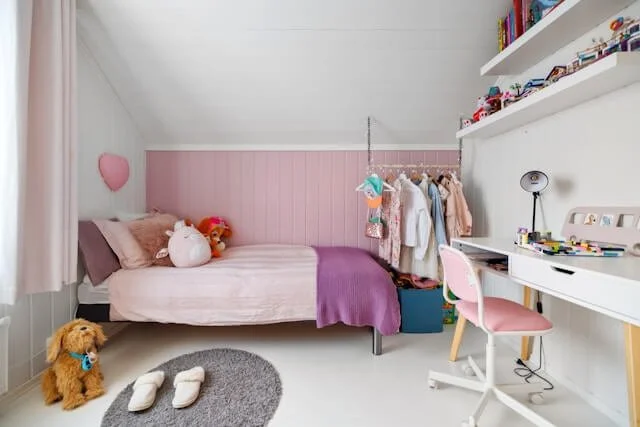
How did that dysregulation translate to bedtime struggles?
From this point on, getting her to bed and asleep took 3+ hours of my undivided attention every evening. We would start at 6pm and it would take every ounce of my mental capacity to guide her through the same routine, to stay on task and to focus, knowing she could melt down and get physically / verbally aggressive at any given moment for no apparent reason.
Except of course there were several reasons, we just hadn’t learned to identify them yet!
If she was asleep by 9pm and I hadn’t been reduced to tears, we would chalk that up as having been a successful night but the toll it took on my emotional resources (and my own sensory overstimulation as a result) over the years was pretty hefty. H was also was running into our room every few hours throughout the night in a blind panic. I can still hear the sound of her footsteps thundering across the landing - she made a lot of noise for such a petite frame.
By the time H was seven, things were ramping up and her anxiety was through the roof. Every tiny thing and every single sound was sending alarms bells to her nervous system and creating waves of terror and fear that were bigger than her little body could handle.
The sound of a motorbike outside wasn’t just a passing motorbike - she’s was convinced it would crash through her window, on purpose, to hurt her.
Her teddies had to be arranged in a particular order so that the shadows they created on the bedroom ceiling had exactly the same shaped silhouette - if there was any change to the shape of the shadow (I,e, pink unicorn’s leg was sticking out from under panda’s armpit), grave danger was about to descend.
She had to sleep facing the door so that if a burglar came into the house, she’d see them in time to hide - but the door had to be closed
She needed a nightlight in her room, but on a certain brightness setting (white light, not warm light) so she could see danger coming
Any person passing by our house who shouted or laughed was there deliberately, to target our house and come in to hurt us.
There had to be a nightlight on the landing; bathroom light on; landing light off. If my husband or I disturbed the lighting before she was asleep, she’d scream. Neither of us could use the upstairs bathroom/shower until she was fully asleep - closing the bathroom door changed the glow of light around her bedroom door frame!
The frequency of the midnight stampedes to our bedroom was also ever increasing.
My husband and I were so exhausted (as was H of course) that one night, when I just couldn’t take any more broken sleep, I grabbed a spare duvet and my pillow and I just laid down on her bedroom floor, and I assured her that I would stay there until the morning. The physical relief in her body was visible, even in the dimmed lighting. She slept through the rest of the night.
And so it began. The start of two years on her bedroom floor.
I’m eternally grateful that my husband never once judged me or verbally challenged me over this decision. He accepted that I felt it was the right choice for H and supported me throughout.
My nervous system, however, was essentially never getting any time out from her sensory needs. I was struggling to stay centred enough to co-regulate her but I pushed through because I was determined that it would come right when she felt safe and secure enough to sleep in her room on her own. And it paid off.
She did when she was 9 but it didn’t happen overnight. I started my moving my futon away from her bed, towards the door and then after a few weeks, I put it on the landing right outside her door. That was a nice surprise for L when she came home from her boyfriend’s one evening, stumbling across a homeless person in the dark at the top of the stairs as she crept to her room !!
It was then another six months before I could come out of her room, shut the door and walk away. For six months after she agreed to go to bed by herself, I had to sit on the landing right outside her door, for anything between 30-60 mins where she’d continually call out every 5-10 minutes to check I was still “in situ”. If I didn’t open the door and confirm my attendance within three seconds of her calling out, she’d start to panic. It was gruelling and exhausting but I just kept reminding myself that the more work we put in up front to help her feel safe and secure, the better she’d be in the long time. This was the “long game”.
H is now 11 and we have streamlined the bedtime routine to an hour on a good night, two hours on a more tricky one.
But let’s be clear, whilst I’m no longer on her bedroom floor (or camping outside on the landing), I am fully equipping myself with the mindset that there is an 80% chance I’ll be back there on the futon in her room if her start at secondary school this September is rocky. If that happens, how long with it last? How long is a piece of string!
I am not giving it a time frame and I’m not going to waste endless amounts of energy trying to work against it or be resentful of it. I am just going to meet her where she’s at. Because co-regulation is the core element of her mental well being.
So how do we help an anxious child to sleep better with more confidence?

It took me a very long time to understand how H could do the same routine, night in and night out, and yet still appear to be completely clueless every evening as to what was coming next. She thrives on routine obviously, so why the meltdowns and why all the pushback??
Why, when we were keeping her routine the same every night, going to bed at the same time and following all the guidelines about “sleep hygiene”, was that not providing enough security for a calm and regulated night’s sleep?
What do I now know?
I now know that I was completely missing the main point! Yes sleep hygiene is critical but with neurodivergence at play, there are other elements that need to be factored in.
I now understand we were, in fact, dealing with two extra main issues at bedtime:
Nervous system dysregulation following the departure of her school friend made her feel “unsafe” in her little world; and
Procrastination due to sensory overstimulation and needing to avoid certain sensory inputs (particularly teeth brushing).
H’s sensitivity to both sensory processing and nervous system regulation exist on a continuing sliding scale. If she’s had a difficult day, we can expect 10 out of 10 on both of the above. My husband and I get our seatbelts on because we know we are in for a bumpy evening!
Attachment parenting
I read in one of those old time parenting books (the ones I was given by a mental health support professional when I flagged that we were having issues with H around the age of 6) that putting babies down for sleep when they are actually still awake produces a dream child who knows how to “self sooth” and therefore how to go to sleep on their own.
Well, as a baby and toddler in the cot (controlled environment with blackout blinds and a white noise machine), I did actually do this and H did go to sleep on her own every time. I was so proud that I had met at least some of the criteria in this parenting game even if the sleeping environment had to be rigid!! I had also stupidly assumed that once you conquer this “self soothing” practice, it's a lifelong skill that doesn't regress. Well we can confirm quite categorically that this not true. Regressions can happen in anxious children.
I have also since read a lot of literature about how a secure child (who has had lots of attachment parenting) often grows up to be much more confident in the long term. I wish I had read that literature much earlier.
I also read a sentence that I have never forgotten.
“You are meeting your child’s needs NOW, so you don’t have to when they are older. “
I wish I had met all of H's needs when it came to feeling safe and secure during sleep as a baby. It does not mean we could have avoided the period of time described above, but we might have saved her a lot of anxiety so that the episode of time when she was so frightened at night might have been much less in the long run.
Tips for reducing anxiety before bed
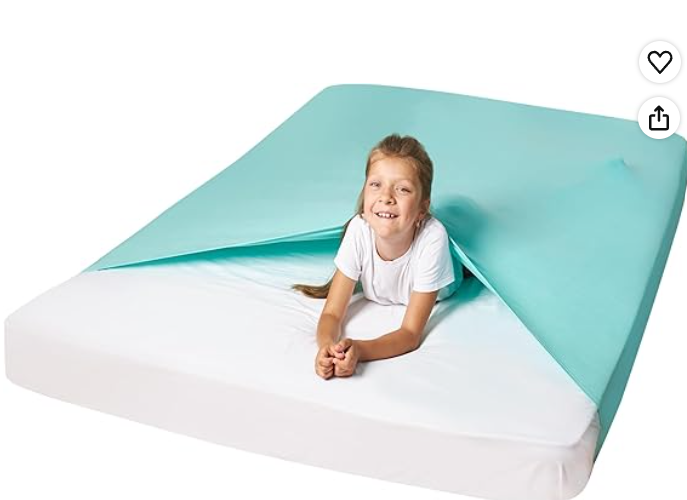
If you haven’t come across a compression sheet before, you might want to consider trying one of these. It fits completely over the mattress creating a “lycra” type but soft compression. The child feels contained in it but yet it’s so super stretchy that they can move about without restriction. For the time that H had hers on her bed (a year or so) it seemed to do wonders for helping her sensory input and nervous system regulation right before bed.
It was the turning point where H actually wanted to get into bed instead of fighting and resisting the transition.

As we only have a small garden and no room for a trampoline, we have recently installed a hammock chair in H’s room which my husband has suspended from the ceiling. Gentle rocking and swaying is also great for sensory input and nervous system regulation. As a teenager, I used to spend hours in the summer on the swing chair in our garden. It made me feel so calm and peaceful although I had no idea why - obviously now I do! If you have space in your house for an egg chair / hammock chair, it could be game changer in calming a child before bed.

Lavender pillow spray has two benefits:
The obvious one - lavender is a well known herbal remedy for calming the body when you breathe it in;
The less obvious one - mapping an external sensory item to a specific task / time of day can help to provide a child with predictability and routine. A person learns to “associate” the smell with the action if it’s done consistently.
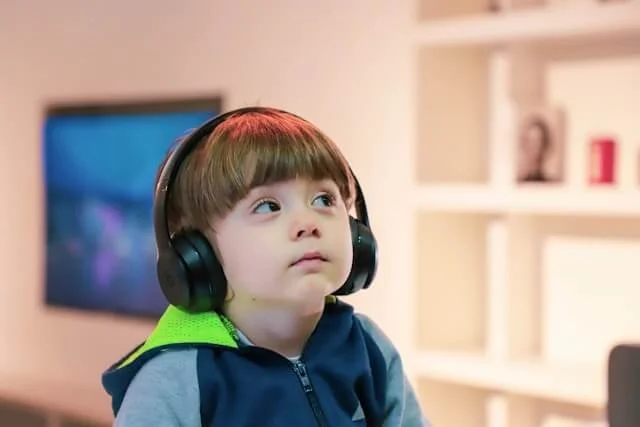
I am not sure if every Borough Council offers this, but our Borough has an app which allows you to download and listen to audio stories. It has a good wide range of kids’ audio books and we have spent countless hours listening to Diary of a Wimpy Kid, Tom Gates and Lottie Brooks! Part of H’s bedtime routine, after we have done teeth brushing, is to get into bed and listen for a story for 30 mins. It helps her to focus her mind away from the stresses of the day. Again, because it’s part of the daily routine, it has become a tool that is mapped to the bedtime routine and so as soon as she hears me put the speaker on, she often subconsciously gravitates towards her bed without me having to give a verbal request.

Now, whilst I am not recommending this one (because it can be very sensory draining for the parent!) I have to put it here because it is H’s main bedtime regulation tool and so I wanted to demonstrate how strong her need is for this sensory input and how it can calm the nervous system. Whilst H is listening to her audio book in bed, I also have to lay with her and I have to stroke/gently tickle her back. For the whole 30 mins. On a bad night, it could be longer.
I am trying to teach her to provide her own sensory input before bed, but we aren’t there yet because apparently there is no substitute for mummy’s back tickles so it’s still me at the moment! On the positive side, it’s the perfect time to do some bonding and it means she sleeps better generally.

Lastly, if you haven’t already, perhaps try a weighted blanket. An alternative to the stretchy compression sheet highlighted above, it’s versatile as it can be used anywhere around the house. H loves hers and uses it at bedtime unless it’s too hot during the summer. Deep compression can be extremely regulating, even when just watching TV.